

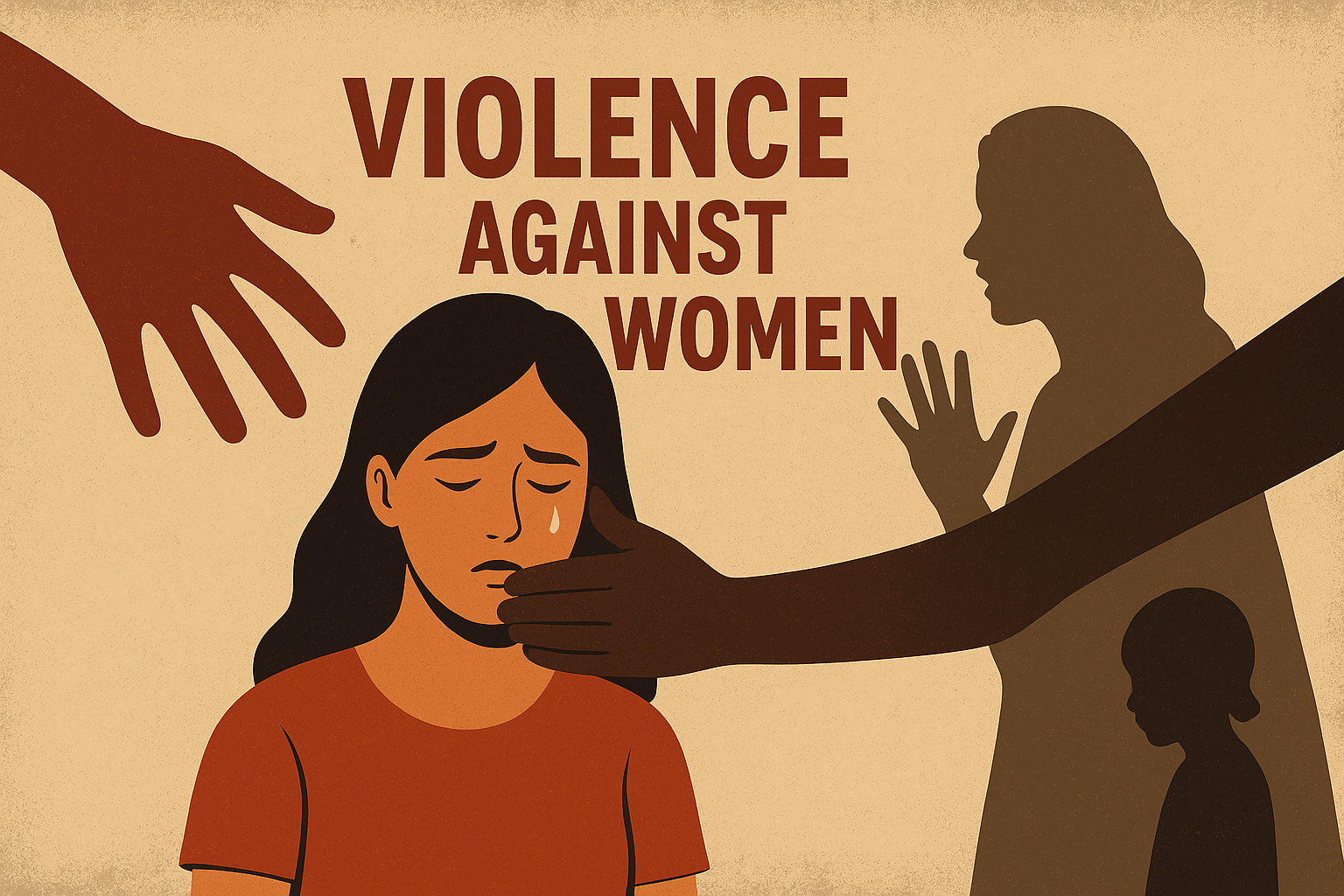
Violence against women is one of the most critical and persistent human rights violations in the modern world. It not only threatens women’s physical safety but also endangers their psychological and emotional well-being. Moreover, this form of violence affects children, families, and entire communities. Therefore, combating violence against women is not solely a legal responsibility but also a social, moral, and humanitarian obligation. Without addressing this issue, genuine social development remains impossible.
To begin with, violence against women is deeply rooted in patriarchal systems that favor male authority and decision-making. These systems create unequal power dynamics that allow men to dominate women both within the family and in society. On a structural level, weak legal frameworks, limited law enforcement, and insufficient support services leave women vulnerable. On a cultural level, harmful traditions, discriminatory norms, and silence around abuse normalize male dominance. Consequently, unless these structural and cultural barriers are removed, achieving gender equality will remain a distant goal.
Furthermore, gender-based violence is not an isolated act; rather, it is a reflection of broader social patterns. Discrimination at home, unequal opportunities in the workplace, and stereotypes in the communities all contribute to a cycle of violence. Children who witness violence, even if they are not directly harmed, experience serious emotional consequences. For instance, they may suffer from anxiety, sleep disorders, aggressive behavior, and long-term psychological trauma. As a result, the impact of violence extends beyond the individual woman and influences the future mental health and social development of the next generation.
In addition, violence against women must not be viewed as a private or personal matter. When society labels severe crimes such as femicide or assault as “family issues,” it minimizes the seriousness of the act and protects the perpetrator. Such language, including expressions like “family dispute” or “domestic misunderstanding,” hides the real nature of the crime and prevents justice. Moreover, it discourages women from reporting abuse because they fear blame, shame, or social isolation. Therefore, both media and institutions must use accurate and responsible language that acknowledges the reality of gender-based violence.
Equally important, governments, communities, and educational institutions play a key role in prevention. Strong legal protections, safe reporting systems, women’s shelters, psychological counseling, and awareness-raising programs are essential. Schools, in particular, should promote gender equality through curriculum and behavior, teaching boys and girls respect, empathy, and shared responsibility. If these preventive measures are implemented, society moves closer to a safer and a more equitable environment for all.
In conclusion, violence against women is a multidimensional issue that demands collective action. It threatens fundamental human rights, damages family structures, and hinders national development. Therefore, addressing it requires structural reforms, cultural transformation, and long-term educational efforts. Only when society rejects discrimination and embraces equality can women, and future generations, live free from violence, fear, and injustice.
– Roqia & Sabira
Letter received from our students participating in our Mentorship program. Text altered for protection of our students and for grammatical changes.


No matter if some one searches for his required thing, thus
he/she needs to be available that in detail, therefore that thing
is maintained over here.
My web blog … Nguồn
1ztlem